Why Do I Get So Defensive?
Why Do I Get So Defensive?
Why Defensiveness Happens — And What It May Be Trying to Protect
What feelings come up for you when you are accused of doing something wrong?
And when those feelings come up, what is your reaction?
Perhaps you are like me. After all, we are all equally human and share the same core feelings. When I am accused of wrongdoing, I know I have felt a terrible sense of injustice, hurt, pain, shame, guilt, and confusion, and I have reacted with defensiveness, arguing back, proving my point, that I am in fact innocent of the accusation, and I have needed the other person to apologize and acknowledge that they were wrong to accuse me.
Key Takeaways
Defensiveness is often a protective response rooted in shame, hurt, or unresolved emotional wounds.
Learning to recognize emotional triggers can help build greater self-awareness and internal safety.
Survival responses like fight, flight, or fix patterns often develop in childhood and continue into adulthood.
Healing involves learning to self-soothe, understand emotional reactions, and shift from survival mode into secure adulthood.
Before I offer you an alternative reaction to defensiveness, and even make a case against it, I want to be crystal clear: there is absolutely nothing wrong with any of the feelings that come up. Every one of those feelings makes sense and is valid. We can probably even trace those feelings back to other times in our lives when we have felt similarly. The problem here is our reaction, the defensiveness itself.
Why do we react with defensiveness?
Well, if we are willing to dig a little deeper, we may discover that defensiveness is a sign that we have lost touch with (or have not yet developed) our sense of internal confidence and safety and we need external validation and control in order to feel safe. It shows up when we have not yet learned how to orient ourselves inward instead of outward for safety. At its core, defensiveness signals that we have an unresolved wound that is still in need of healing. It indicates that there are adaptive child parts of ourselves that have not yet felt seen and heard and are waiting to be soothed and nurtured. The feelings that come up when accused of wrongdoing are the data we need to heal that wound.
When we react defensively, we disrespect ourselves just as much as we disrespect the other. By failing to read the data (aka feelings) and offer self-soothing, nurturing and guidance to an aching part of ourselves, we disrespect and neglect ourselves. When we don’t turn inward, we don’t get to build internal safety, which it turns out, is the only safety we actually have control over!
Here is what it looks like when I shift my focus inward. When accused of wrongdoing, I take in the data, noticing my rising feelings of hurt, pain, shame, guilt and confusion, and I stop and take a relational breath, offering myself self-support and self-soothing for these painful emotions. Once my adaptive child parts have been adequately soothed, my adult brain is back on line and accessible to strategize effective ways of managing the accusation with empathy, not defensiveness. As I began the journey of focusing inward, I needed time to do this work. What I noticed is that the more I soothed my adaptive child parts, the work became easier and quicker. Internal safety was in my reach. I wish the same for you!
When we live in survival mode, whether we are in the trauma state of fight, flight or fix, we are dependent upon an external source for safety. In survival, the focus is on DOING, what can I DO next to ensure safety? Can I fix this, can I fight this or do I need to escape this? We do not have the luxury of exploring internal safety, which might involve grieving losses, recognizing our needs, or even knowing who we are. We cannot afford to simply BE, we must focus instead on what we can DO in order to survive.
As children, we are completely dependent upon the adults in our lives to keep us safe. We naturally orient ourselves outward for safety. As we mature, and arrive in our teenage years, we begin to recognize that we can make choices for ourselves to keep ourselves safe. We begin orienting inward for safety as we learn by trial and error who we are and what we value.
If we were lucky enough to have been born in to a secure family, chances are we organically feel safe in our own bodies and do not live in survival, protective mode. Why is that? Because the adults in our lives have supported us through hard times and painful feelings, offering us guidance, nurturing and boundaries. We thus have enough internal confidence to navigate challenges and emotional distress.
If, however, we were raised in violent, abusive or neglectful homes, our identities harden into a protective stance, and we lose our ability to just BE. Often, until our teenage years, we have responded to unsafe adults with the “fix” trauma response, complying and shrinking to protect ourselves. Once the teenage years arrive, we sometimes move into a fight or flight response, due to having more agency over our lives. Once we are fully adult, in our twenties, our trauma responses (fight, flight or fix) are firmly established patterns of engaging with the world.
The problem is, it is exhausting to be in survival mode, compelled to protect, to always be DOING something. The people around us don’t like it either, they often point out the impact we are having on them and it hurts. Somewhere deep inside, we have a gut level feeling that there has got to be more to life than proving, protecting, surviving, DOING. The good news is: it is never too late to grow!
In therapy, we begin to dig deeper, to explore who you are, what parts have been protecting you for so long, and why they had to. As we do so, something shifts, space opens up and we begin orienting inward into BEING. The process can be painful as we discover grief and loss, unmet needs and pain. Nevertheless, we recognize the value in honestly feeling our feelings, BEING with ourselves and caring for ourselves. In therapy, the therapist offers support, guidance, and boundaries. Slowly we grow, we mature. We can’t always describe in words the ways in which we have changed along the way, I have heard it said: I feel more like MYSELF now. Welcome to secure adulthood!
If you’re feeling stuck in survival mode—constantly doing, fixing, or protecting—and are ready to begin reconnecting with yourself, therapy can help you move toward a more grounded, secure way of being. Shoshana Thaler works with individuals navigating trauma, identity, and emotional overwhelm, offering a supportive space to explore, heal, and grow. To learn more or schedule a session, reach out to Center for Integrative Change.
Healing these deeper emotional wounds often begins with learning how to feel safe within ourselves. If this resonates with you, reach out to Center for Integrative Change or connect with Shoshana Thaler to learn more about therapy and support options.

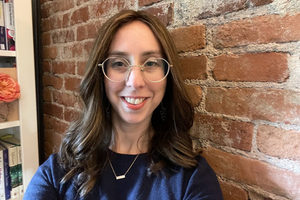
Meet Shoshana!
About The Author
Shoshana is a licensed clinician in the state of Pennsylvania (PC019616). Shoshana supports adult individuals and couples in healing from betrayal, addiction, infidelity, and trauma. When she is not at work, she can be found walking with friends, doing yoga, at the library finding science books for her little guy, or shopping and cooking with her teenagers. She loves the ocean and hiking in nature.